Adrian Smith - English version
ENTREVISTAS
Forging the Grimdark: An interview with artist Adrian Smith
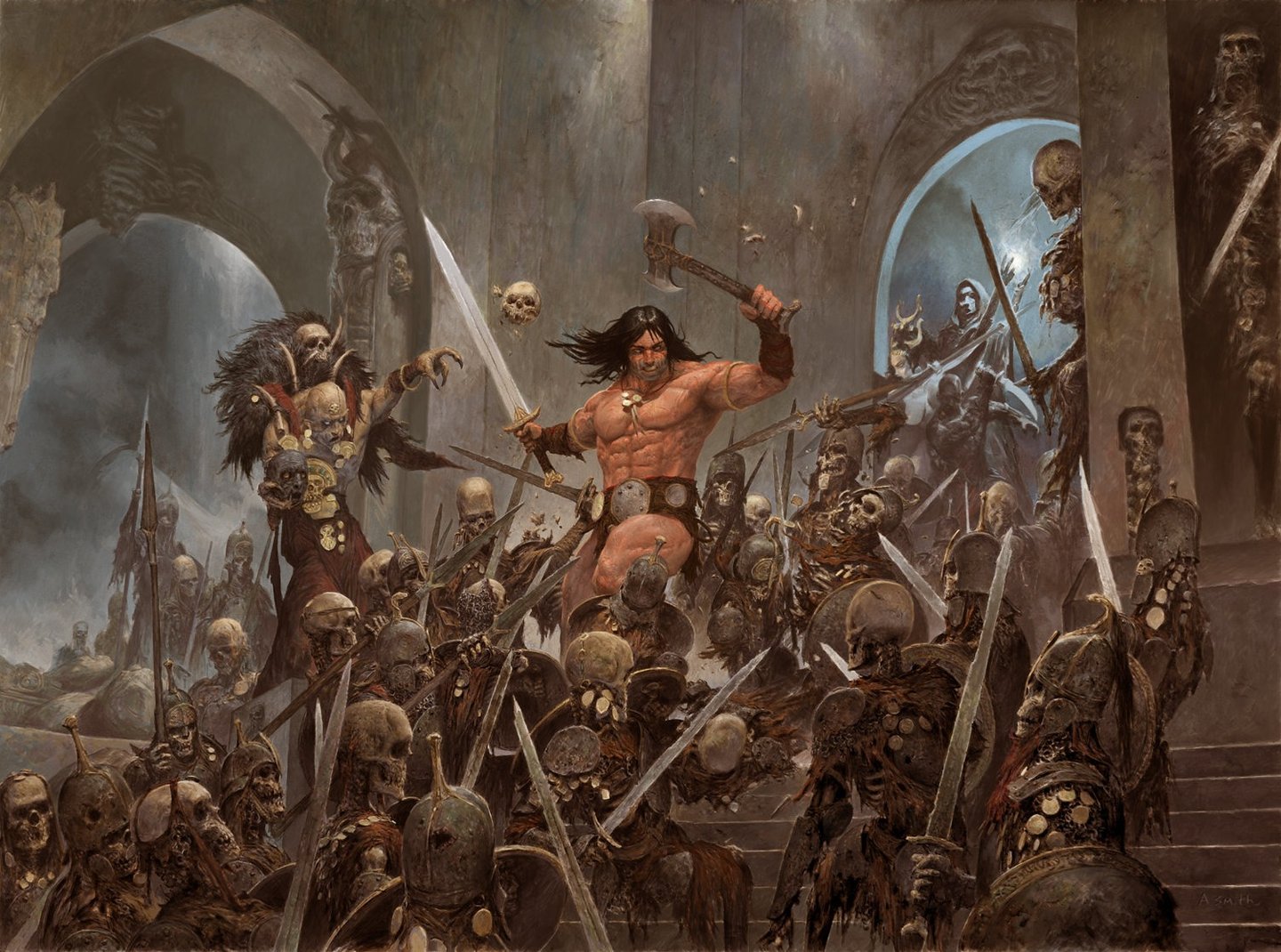
We have the distinct pleasure of speaking with the legendary artist Adrian Smith, whose dark and visceral style was instrumental in defining the grim aesthetic of the Warhammer universe. His iconic illustrations for Games Workshop throughout the late 80s and 90s, particularly on seminal titles like Advanced Heroquest and Realm of Chaos books, have left an indelible mark on the fantasy genre. We sat down with Adrian to discuss two of his key projects from that era and explore the history of some of his most celebrated work.
Complete interview with Adrian Smith
The Path to the Studio
To begin, could you outline the professional path that led you to the Games Workshop Design Studio in the 1980s?
Adrian Smith: I started working on my first ever commission in a freelance context with a then young, Games Workshop (GW). This early work was primarily on the book Realm of Chaos: Lost and the Damned. One day I returned home to be told that my dad had taken it on himself to call the GW studio to ask whether they had inhouse vacancy! Suffice to say, he got his way and I was finally out of the house, haha. Cheers, Dad!
Prior to joining the company, what was your relationship with the fantasy and science-fiction genres, and which artists were your primary sources of inspiration during those formative years?
AS: Before working with GW, I was already a big fan of the Citadel Miniatures. This was before there were stores everywhere. I was buying mine from the book store in town. Sold loose, no blister packs. 25p each! a lot of money for a kid like me back then.
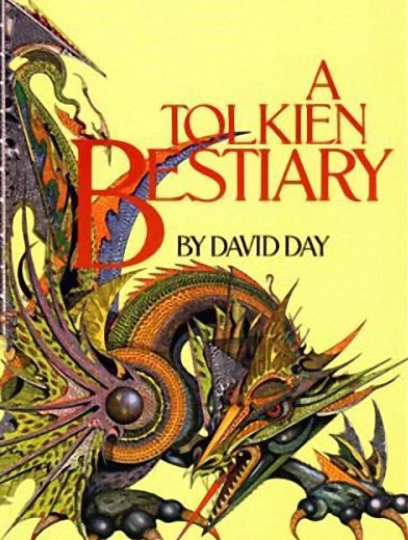
In the same store, I would get my fix of staring at artbooks. My early favourites were Rodney Matthews, Ian Miller, Gustave Dore, all the artists in the book A Tolkien Bestiary, a book I still adore.
Your name is synonymous with the dark, visceral, and gritty aesthetic of classic Warhammer. Was this a style you had already developed, or did it emerge and solidify as you began illustrating its grim world?
AS: I seem to have always had a liking for illustrating the grittier darker side of fantasy. I'm actually extremely squeamish, so I think its probably some kind of weird therapy going on there. Those sensibilities were already present before discovering Warhammer.
Illustrating Perilous Worlds: Advanced Heroquest & The Empire in Flames
In 1989, your work was central to two major, interconnected releases: the Advanced Heroquest board game and The Empire in Flames, the finale to the legendary Warhammer Fantasy Roleplay campaign. How were these two landmark projects first presented to you, and what was the process for working on them concurrently?
AS: Unfortunately I wasn't really aware of the project. I know that sounds strange. The work I did for it was mostly done before I joined the studio.
The Empire in Flames features interior art also used in the Advanced Heroquest rulebook. Could you shed some light on the history of these illustrations? Were they commissioned specifically for The Empire in Flames, or was the artwork originally developed for Advanced Heroquest and later repurposed for the RPG supplement?
AS: Again I'm hazy on specifics but I do remember hearing that Brian Ansell liked my rendition of the Chaos Warriors and encouraged others in the studio to follow similar lines. So I'm really not sure on the order of things around that time.
Delving deeper into the creation of Advanced Heroquest, what was the typical workflow for an illustration? Did the art briefs provide strict guidelines on composition and character portrayal, or were you given a significant degree of creative freedom?
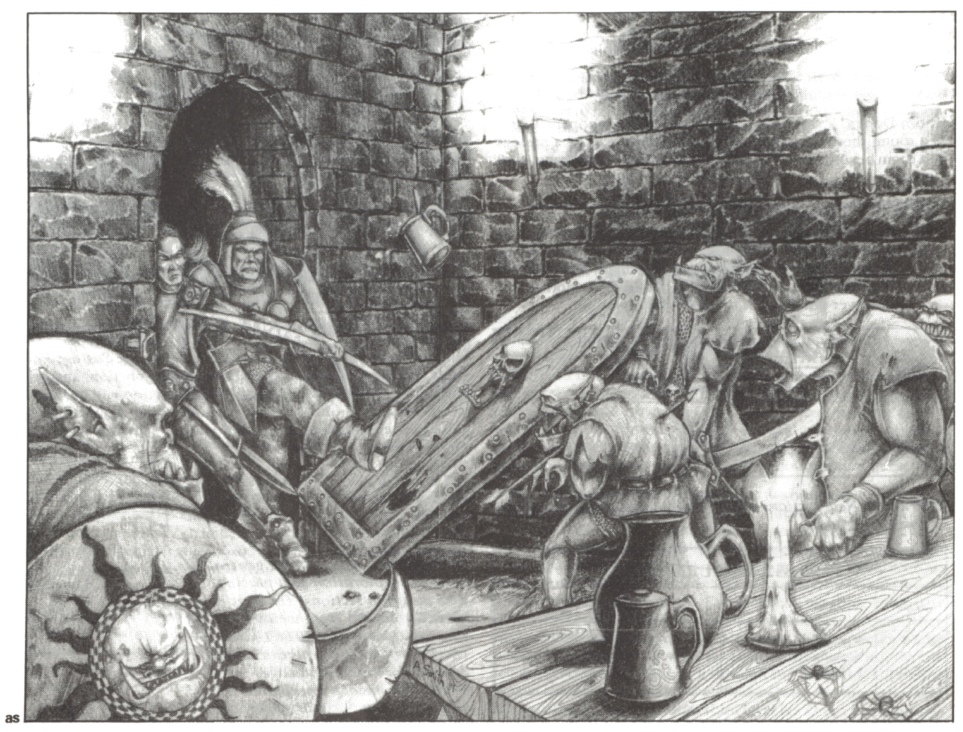
AS: If we were ever given a brief, it was usually vague If I remember rightly the brief wouldn't be any more detailed than 'Dwarf fighter bursts in on room full of goblins'.
Its not always a good idea to 'tell' the artist how to compose, or give the artist a list of details to add. If they want that, there's AI.
Was there any direct collaboration with the miniature sculptors of that era, such as Bob Naismith, to coordinate and unify the artistic vision between the 2D art and the tabletop models? We would be fascinated to hear any memorable anecdotes from that process.
AS: Actually there was very little interaction with the sculptors, not in the professional sense anyway. We were usually aware of what everyone was doing and knew the direction to take. All creatives had a surprising amount of freedom in those early years. I never met Bob, unfortunately.
You contributed several illustrations to the Advanced Heroquest expansion, Terror in the Dark. Could you elaborate on the extent of your involvement in that project and how the creative process differed from the core game?
AS: Hmm, too long ago for me to be specific but I don't remember much difference in the process.
Looking back at this incredibly creative period, what was the atmosphere like in the Design Studio, working alongside other influential artists like Gary Chalk and Paul Bonner? Was it a collaborative environment where ideas were exchanged?
AS: It was a good time. Especially far a young artist wannabe sitting in a room surrounded by people like this, it was quite daunting and yet very inspiring.
Artists don't appreciate other artists making Suggestion haha! They soon get annoyed by people watching them work over their shoulder, as I found out.
It was a great time and important experience for me as I was a young artist who was not able to get into art college. This time proved to be a big learning curve.
Lost Art & Legacy
Was any artwork commissioned from you for either Advanced Heroquest or The Empire in Flames that, for one reason or another, was not included in the final publications? If so, would you be willing to describe this unseen material?
AS: I don't know, perhaps. I'll have a look through the Warhammer folio and see what I have left from those projects. Happy to show.*(I remain in contact with Adrian, and should he send me any previously unseen images, I will update this interview).
Are any of the original physical artworks from this period still in your possession?
AS: A few I think...
Of all the pieces you created for these two projects, are there any that you look back on with particular pride?
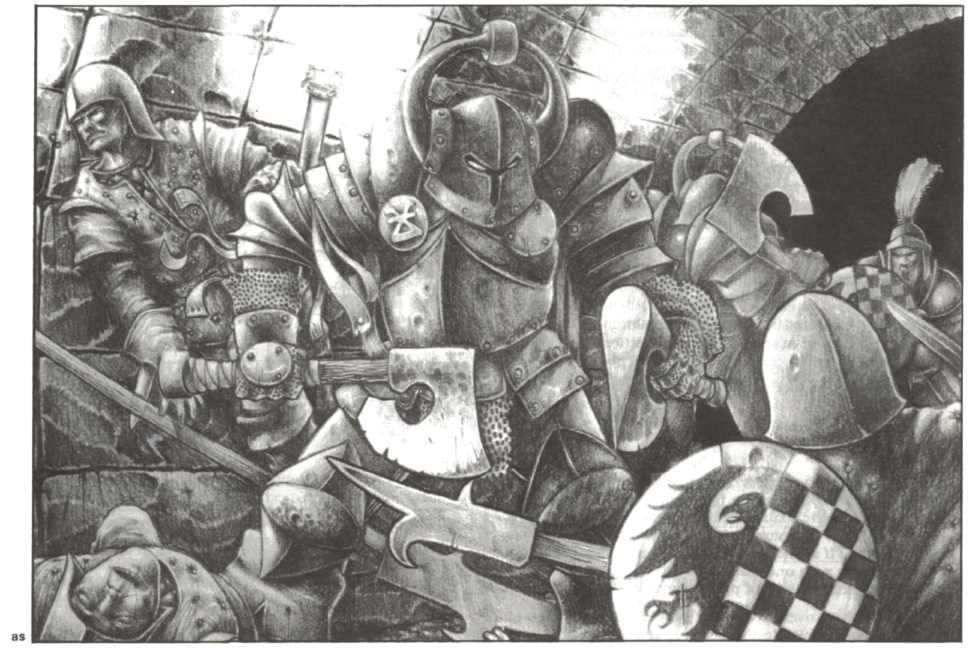
AS: Probably the Chaos Knights in the tunnel.
Current Perspectives
As an artist who was so instrumental in defining a very tactile, ink-driven style, what are your thoughts on the evolution of fantasy art into the digital landscape of today?
AS: That work is actually pencil. As far as digital art goes I like a lot of it. Personally I make sure at least 50% of my time is working traditionally. Digital is just another tool, I wouldn't rely on it solely.
Are you still active within the tabletop RPG or board game industry, either professionally or as a fan?
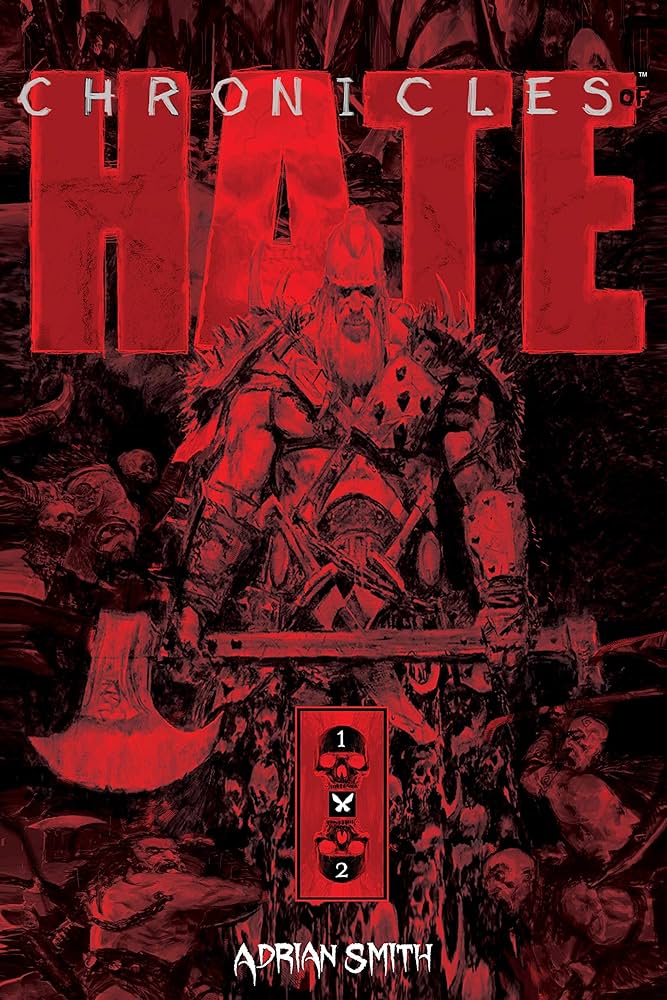
AS: Very much so. Most of the work I take is Board game, RPG or Wargame. My personal long time project, 'Chronicles of HATE', started as a comic over ten years ago. now its a boardgame being made into a Spanish language RPG, soon a French version and later this year in English.
Along with more related stuff later this year. I suppose the better known games would be Rising Sun, The Others, Cthulhu-death may die, Bloodrage and Ankh. These were games produced by CMON and Guillotine Games.
And finally, could you tell us about your current professional endeavors? Are there any forthcoming projects you would like to share with our readers?
AS: As well as what I've mentioned above, a small group of friends and I have been working on the HATE movie.
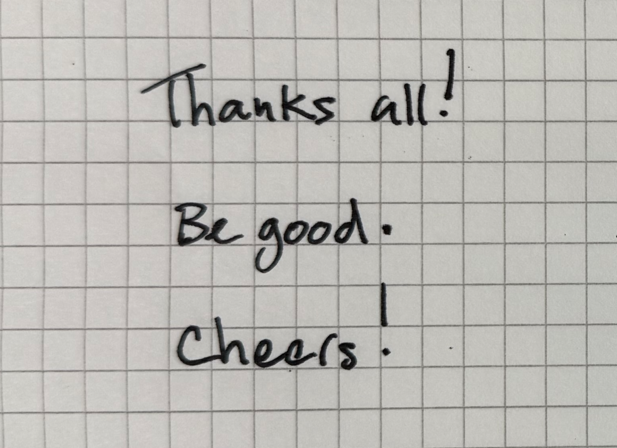
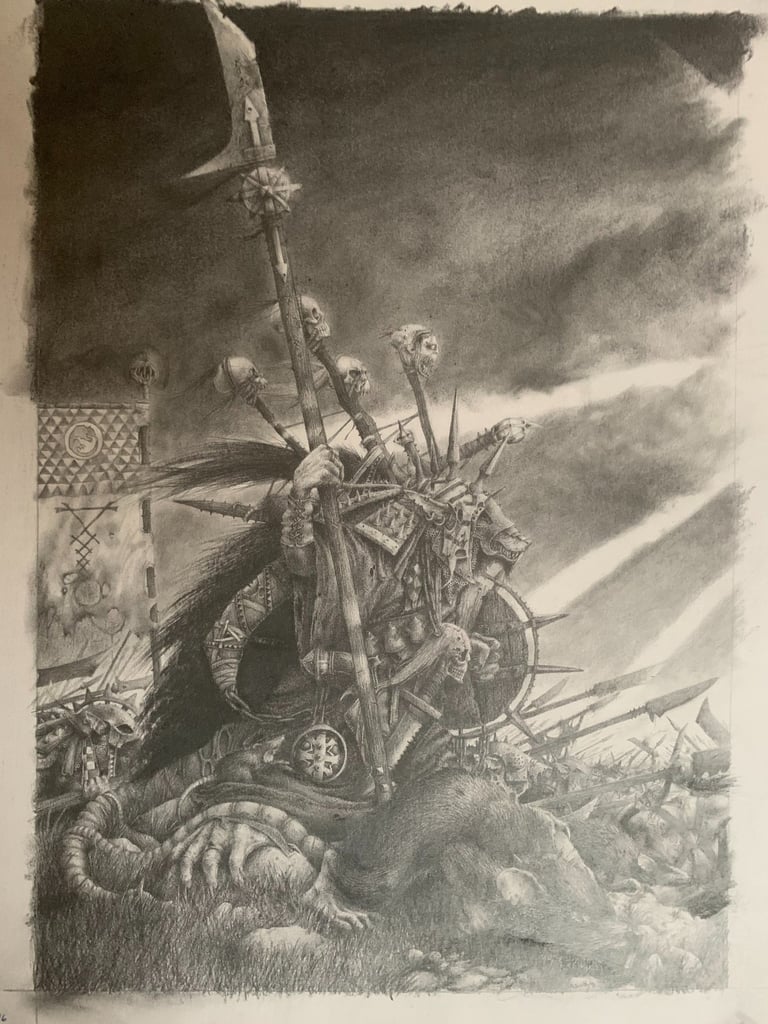
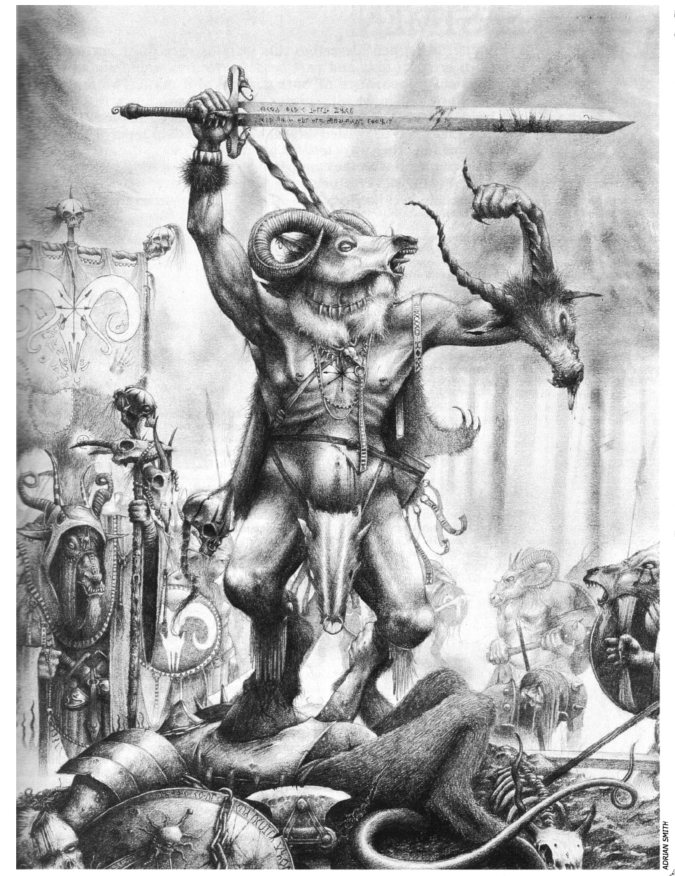
I wish to extend my deepest thanks to Adrian Smith for taking the time to share his memories with us. To close the interview, I wanted to share the image above; it is taken from the file Adrian emailed me, containing answers in his own handwriting. This is the closest I shall ever get to owning an original piece from this amazing artist. :-)
HeroQuester.eu © 2023
Puedes contribuir a mantener activo este sitio web. Muchas gracias por tu apoyo!