Andy Warwick - English version
ENTREVISTAS
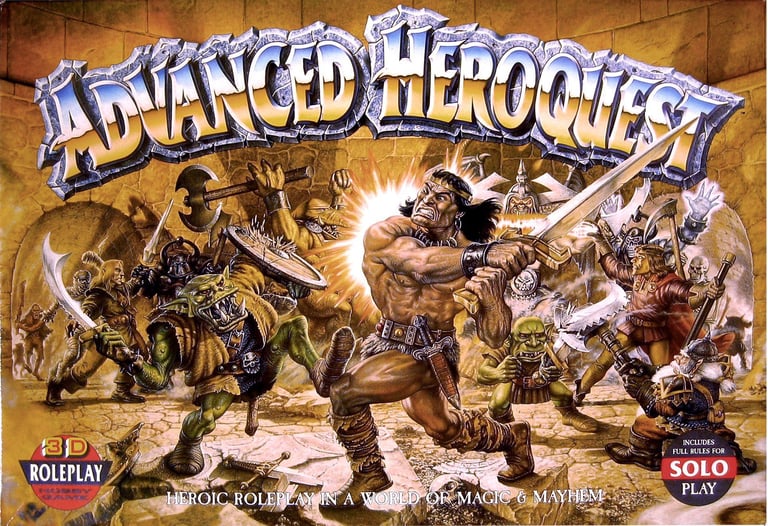
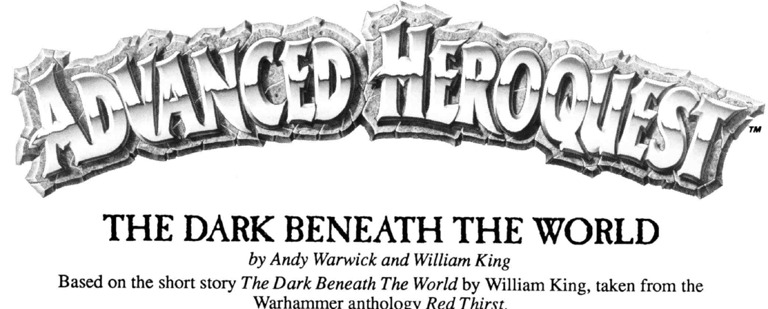
Joining us today is Andy Warwick, a former Games Workshop Design Studio member who played a crucial role in bringing some of AHQ's most legendary campaigns to life, including The Quest for Sonneklinge and The Dark Beneath the World. In this interview, Andy pulls back the curtain on the cramped, creative chaos of the early Nottingham studio, the realities of game design under tight publishing deadlines, and what it was truly like to collaborate with Warhammer legends.
Complete interview with Andy Warwick
Introduction & The Games Workshop Golden Era
Andy, welcome to heroquester.eu! You joined the Games Workshop Design Studio in 1989, a period many of us consider the true "Golden Era" of the hobby. What was the atmosphere like in the studio back then, and could you tell us the story of how you actually got hired?
Andy Warwick: At that time the Design Studio wasn’t in the huge Lenton offices, nor the Castle Boulevard building where I spent the bulk of my tenure; it was down an alleyway, in a very old building, on Low Pavement. That meant we were all in little offices, separated by maze-like corridors, and isolated by role: writers and editors in one bit, artists and paste-up on another floor.
Desktop publishing hadn’t yet been invented, so it was all spray mount and bits of paper to produce the rulebooks, and writing was done on old word processors and dot-matrix printers. Very old school, and it led to a very ‘hobby’ atmosphere, rather than the polished production house Games Workshop would become in later years.
I got hired after entering a competition in a Citadel Journal to create a new Space Marine chapter. I didn’t win, but I obviously got the ‘feel’ right, and could string a sentence together, of a quality good enough to draw attention. I got a letter asking me if I wanted to try-out as an editor. I, of course, said yes, quit my job as a trainee graphic designer, and—for the next 6 months—commuted to Nottingham from Tamworth every day, until I moved full-time into a rented house in The Meadows. (Which had just been vacated by Matt Forbeck, who moved back to the US.)
Advanced Heroquest (AHQ) hit the shelves right around the time you joined, bridging the gap between the accessible Milton Bradley HeroQuest and the deeper lore of Warhammer Fantasy Roleplay. What were your initial impressions of the game system when it was first introduced to the studio, and how did you get involved in the AHQ project?
AW: I recall doing some playtesting of the game, but my role at that time was mainly writing ‘colour text’ for the rulebooks to fill spaces on the pages, and the first pass edit on rules to check for consistency. It was just another product going through the studio, but caught my eye as it is closer to roleplaying than tabletop battle, which matched my own background in the hobby.
Designing for Advanced Heroquest
When it came to writing new adventures and content for AHQ, what was your general design philosophy? Were you focused more on pushing the limits of the modular dungeon generation, or on telling a gripping, fixed narrative?
AW: Bit of both. I came into the hobby as a DM for my group of D&D playing schoolfriends, so that was always my first love, rather than vast pitched battles. Never had the space (or funds) to scratch that itch, so it was a handful or models, an A4 binder, and a kitchen table between meals.
I loved to create consistent campaigns, down to weather patterns in the worlds I created, so narratives were always important. Dungeon generation was just a mechanic to keep things moving without too much up-front thought.
The game is notoriously unforgiving—death lurks behind every door and hazard stripe! When designing new encounters, how did you balance making a quest challenging and thematic without it becoming entirely impossible for the heroes?
AW: That came down to an internal sense of fair play, and playtesting. It’s always obvious if a rule mechanism feels unfair, but there are always players that wade in and make themselves fair game to get stomped on. If you know how dice, odds and human-nature works, making it fun and fair pretty much handles itself.
What was the playtesting culture like in the studio during the early 90s? Do you have any memorable stories of studio playtests where an AHQ adventure went completely off the rails?
AW: We playtested a lot of games and expansions, not just AHQ, some of which were barely playable, others that were near production ready. Can’t remember most of it, as a lot of the time individual games would get abandoned as something obviously wasn’t working, so that rule or section would go off to be re-written.
You have to remember that it was a paid job, not just having fun, so playtesting was a means to an end, not the goal.
We were all so immersed in the hobby, though, and a lot of the time the games would be pretty well-balanced from day one, so specific games rarely went completely off the rails. Most times it would just be a bunch of mates playing a game, with good sessions and not so good sessions. Lots of in-jokes and friendly competition, but at the end of the day you had to hit deadlines, publish and earn your wage, so if it wasn’t working we just abandoned that game.
The most memorable story I do have of my early years is the naming of Dark Future and Space Hulk. Richard Halliwell (Hal) had a small office next door to mine, and we would playtest some of his work-in-progress ideas. He disliked the final release name of Dark Future, which he co-wrote, and which entered production after its internal code name ‘leaked’ into the final product. It was just what everyone called it internally, and no one thought to ship it with anything more considered. When it came to his next product, as sole designer, he was adamant that any code name would not become its final name, before it was thought through and discussed. So his binder of rough rules was labeled with an absolutely unprintable codename that no one outside the studio could even say in polite conversation, and stood no chance of making the box and final product. Which was all very Hal, may he rest in peace. (And no, I will not tell you what that codename was, as it was far too rude.)
The Quest for Sonneklinge
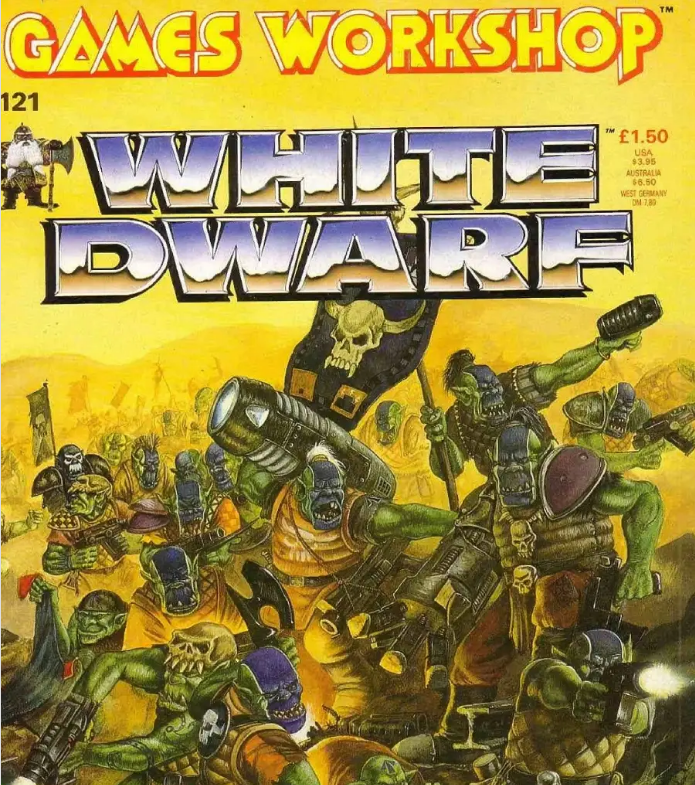
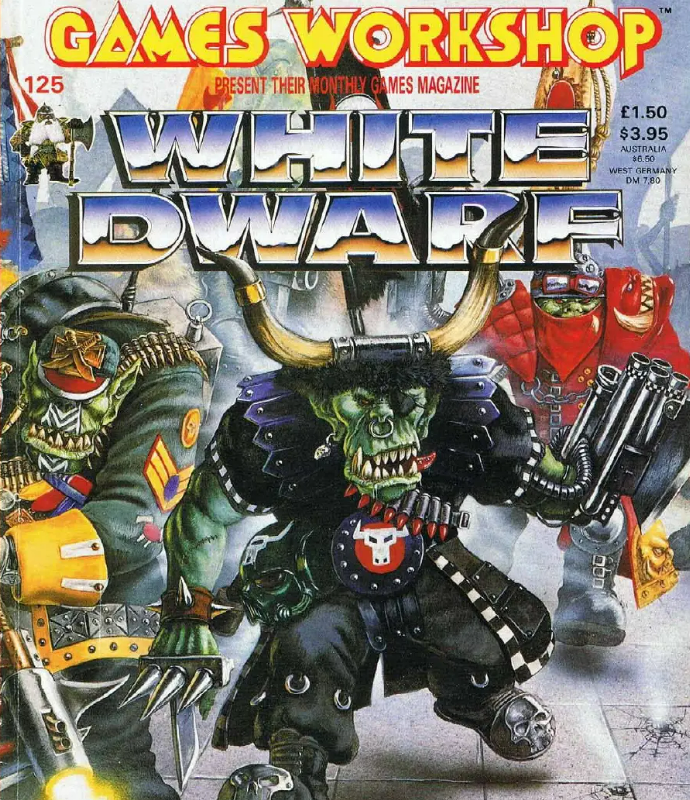
Let’s talk about "The Quest for Sonneklinge," which remains a highly memorable adventure for readers of White Dwarf. How did the initial concept for this specific quest come about?
AW: To be honest I can’t even remember writing it, it’s so long ago. Concepts often came from existing artwork, new miniatures GW wanted to promote, ‘x’ number of pages we needed to fill in White Dwarf that month in support of a specific product, or a known hole in the rules GW wanted to fill but couldn’t squeeze in the main version.
That particular scenario was little more than fetch a ‘McGuffin’, which is obviously a standard adventure idea, layered with a bunch of Warhammer Old World stereotypes, and any in-jokes you could squeeze from thinly-veiled pop-culture references. To hit magazine production deadlines we didn’t have time to think much about it other than that. I’d written such a lot of adventures for D&D and WFRP that they just sort of fell out of my head on demand.
"Sonneklinge" required blending a specific narrative goal (recovering the runeblade) with AHQ's randomized exploration mechanics. As a designer, what were the unique challenges of writing an adventure for a system where you could never be entirely sure what the dungeon layout would look like?
AW: When writing roleplaying supplements a lot of the ‘story’ would be made up on the fly, so it was pretty much more of the same. AHQ is an odd mix of the board game and RPG, so can be played whichever way works for you. We leaned into that, leaving it up to the players to resolve any egregious issues as they hit them. I hate to break it to you, or shatter the illusion, but scenario development was never that considered or planned.
Looking back at the mechanics and special rules you introduced for that quest, is there anything you would tweak or change today with the benefit of hindsight?
AW: No. Again, we just sort of wrote it, trying hard not to put in something obviously cruel or needless, and give the players a fun but challenging game. Let the dice fall where they will. There is always going to be that one player that does the unexpected thing, even if you expect it. It was mostly just ‘feel’, as one group of players will always create their own house rules if they don’t like something, hate a mechanic, and a certain thing feels janky. This was monthly White Dwarf, not tournament play, so the three(?) day deadline to write it was too unforgiving to overthink it.
The Dark Beneath the World & William King
Advanced Heroquest is known for heavily featuring the Skaven and tying directly into the Warhammer Old World lore. How did the idea to include Skavens into several AHQ campaigns originate?
AW: I liked Skaven :) . If I had the space to create a big tabletop my army would have been Skaven, so this was probably the nearest I could get. That was likely the core idea if it wasn’t suggested directly by the books or supporting a new Skaven miniature release, but can’t recall the specific origin.
“The Dark Beneath The World" is legendary among fans, closely tied to the iconic writings of William King, specifically his Gotrek and Felix stories. What was it like collaborating with Bill? Did he have much input into the tabletop mechanics, or did he provide the narrative framework while you translated it into gameplay?
AW: I shared a house with Bill when I moved to Nottingham for the first six months, so it always fell on me—as resident role-player in the studio—to convert his writings into WFRP and related systems rules. We would chat about it in passing, but he was busy with the next book, and I had the manuscripts or printed novel to work from, so it was very organic.
Translating the sheer chaos and brutality of Karak Eight Peaks into a tabletop dungeon crawler must have been daunting. How did you ensure the tabletop mechanics captured the distinct, gritty flavor of Bill King’s narrative?
AW: In those days everything was pretty dirty and gritty. That was the nature of Warhammer, and was baked deep into the material, whether it was fantasy or WH40K. It was there in the artwork, the colour-text, the conversations, the jokes, the whole studio feel. It just happened without much conscious thought. We were a darkly deadpan bunch at times.
Collaborations & The Design Studio
Jervis Johnson is the father of AHQ. How closely did you work with Jervis when creating expansions and magazine articles for his system? Did he have strict guidelines for what could and couldn't be done within the game's framework?
AW: Again, we chatted, and there might be a rough brief, and feedback on draft versions, but given a lot of these articles were narrative and more roleplay, the mechanics were pretty much already there as a strong foundation, and it would be pretty hard to screw it up.
A sense of shared purpose, respect for each other’s craft and the material, and looming deadlines, meant we didn’t over-analyze or get paralyzed by second-guesses. It’s just a game, after all, and people like Jervis were working on next year’s product.
You worked alongside legendary artists like John Blanche, Jes Goodwin, and Gary Chalk. To what extent did the upcoming miniature releases and the evolving art style of the studio dictate the monsters and environments you wrote into your adventures?
AW: Of all the influences, that was probably the biggest external driver. We all loved what they and the other artists produced, but GW was transitioning to a ‘real’ company, and driving miniature sales and printed rulebooks was obviously paramount from a commercial point of view. The sculptors and artists set the tone of everything, so consciously or unconsciously we all followed it.
Plus, every ‘x’ number of issues White Dwarf had to promote and drive demand for a new product, metal or paper, so that’s what the written content did. And whoever liked that genre or product, and had time to do it, was tasked with writing it and getting it out there. We didn’t have time to think about the potential impact 35 years later.
Legacy & Looking Back
The creative output at GW during your tenure was staggering. Were there any AHQ projects, campaigns, or ideas you pitched or began working on that never saw the light of day?
AW: If there were I don’t recall, as there was a treadmill of content: lots of ideas, and not enough time or people to create it. I wasn’t a name, core writer, so I never really had the clout to pitch much.
By the end of my GW stint I had moved more into a production role, as I was always more ‘techy’ than a lot of the artists and writers. As time went on I wrote less and ‘produced’ more, laying out rulebooks and camera artwork for printing.
What I did do, behind the scenes, was help with the transition to DTP in the studio, the deployment of Apple Macs, and convincing people like John Blanche that we could reproduce the studio artwork with scanners and desktop publishing and keep the quality intact.
Finally, Andy, bringing things to the present—we'd love to know what you are up to these days! Are there any current projects or upcoming releases you'd like to share with the community? And after spending so much of your career shaping the games we love, do you still find time to gather around the table, roll some dice, and play games yourself?
AW: I don’t have anything to share of interest, sadly. After leaving GW I moved back into graphic design, and then programming, creating websites and more recently mobile apps. I don’t really play games much more, as I don’t have time or local friends to play with. Most of my colleagues that still gamed moved away and/or had families. Hobbies more recently are LEGO and tinkering with home automation. But occasionally pop into the local Warhammer store and look around, seeing how far the hobby has come. I do have godsons that are just old enough to get into the hobby, so we shall see if I get drawn back in…
A massive thank you to Andy for taking the time to travel back to the GW golden days and share these incredible behind-the-scenes memories with the community. It is a rare treat to hear such candid insights into the practical, deadline-driven, yet undeniably magical environment that gave birth to the games we still cherish decades later.
HeroQuester.eu © 2023
Puedes contribuir a mantener activo este sitio web. Muchas gracias por tu apoyo!