Paul Cockburn - English version
ENTREVISTAS
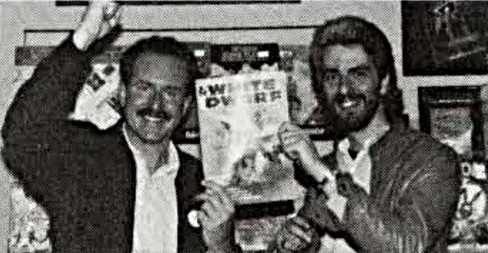
Today, we are diving into a fascinating chapter of tabletop history with Paul Cockburn, a key figure who joined Games Workshop during a massive transitional period for the company. In this wonderfully candid interview, Paul opens up about the clash between wargamer and roleplayer mentalities , shares his unfiltered thoughts on his legacy at GW , and discusses what he is working on today.
Complete interview with Paul Cockburn
The Move to Nottingham & Early GW Days
You joined Games Workshop from TSR UK during a massive transitional period for the company. What were the biggest logistical and creative challenges of relocating the White Dwarf editorial team from London to Nottingham?
Paul Cockburn: First, let me thank you for the opportunity to share a few memories. There seems to be a lot of nostalgic interest about this period in gaming’s history. It was something to have been part of it!
A small correction: I didn’t move directly from TSR UK to GW: there was a little hiatus. As you say, there was a lot going on. I was writing and publishing Gamemaster Publications in the interim.
On my first day in the office in Nottingham, Bryan Ansell asked me to go down to London to handle the logistics of moving White Dwarf to the GW/Citadel studio. My job was to make sure all the equipment got sent up (someone in the Nottingham office arranged all the transport, I just made sure things were ready), and to see how many of the existing editorial staff would be willing to make the move. The answer was: none. I took Ian Marsh, Paul Mason and Mike Lewis out to dinner, but none of the wanted to make that change. So much for my persuasive skills.
A few small acts of sabotage took place during the move, the most important of which was that no articles, artwork or anything else moved up to Nottingham. Apparently, the van driver ‘lost’ it all in a ditch somewhere. So, when I got back to Nottingham, there was precisely nothing for the next issue. We had to compile that in a hurry with whatever there was to hand - and that meant figure painting articles and the like, that could be easily sources in Nottingham. That was the beginning of the big editorial change in White Dwarf.
The move to Nottingham coincided with a major cultural shift within GW as Bryan Ansell centralized the business. How did the day-to-day atmosphere in the studio change as the company transitioned away from its early, scrappy London roots?
PC: Technically, there was no change because no-one from London made the move. But the next (and all future) editions of WD were published in a very different atmosphere. It took no time at all for the magazine to become a Citadel and Warhammer vehicle.
Editing White Dwarf
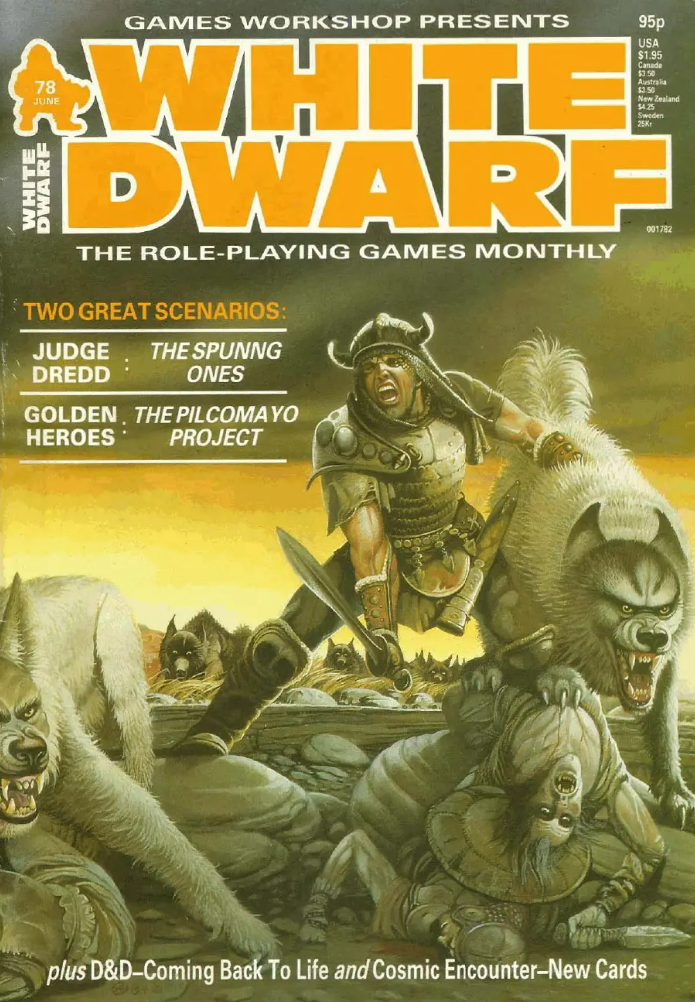
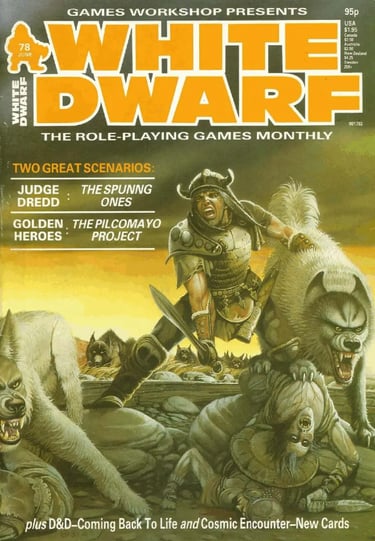
You took over as White Dwarf editor starting with issue #78, right as the magazine was evolving into a dedicated, in-house Warhammer publication. How did you balance the legacy of the magazine's broader RPG roots with this new, Citadel-focused direction?
PC: I should say from the outset that I didn’t actually want to edit White Dwarf. I had done a tough three years as editor of Imagine, and I believed I had been hired to do other work. I forget how many issues I did do: was it only something like four? I hired Mike Brunton as soon as possible.
There was no legacy of the RPG and general hobby coverage that carried over. Very quickly, it became policy to only feature GW (and, within that, mostly Citadel) product. We stopped reviewing other company’s games, except for the few times when there was a deal done with an American publisher. There was a much greater focus on painted miniatures. I think anyone reading WD #77 and then #78 can see the difference, and it accelerated from there.
What was the monthly process actually like for building an issue of White Dwarf back in the late '80s? Was it meticulously planned out months in advance, or was it a scramble to meet printing deadlines?
PC: After the first issue or two, I dragged WD back into some semblance of order, and could plan out the basics of each issue as the last one was being readied for press. The GW Studio in Nottingham was very click at production, so we could produce each new issue quite professionally. The content changed, and many would say changed for the worse, but the production improved enormously.
Do you have a favorite issue, cover, or specific article from your tenure as editor that you feel perfectly captures the "Golden Era" of Games Workshop?
PC: No. Whatever people feel was the ‘Golden Era’, that would be before my time.
Milton Bradley & Third-Party Relationships
During your time at GW, the company had already entered into its legendary partnership with Milton Bradley for games like HeroQuest, Advanced Heroquest, and Space Crusade. As an editor and game developer, were you involved in the world-building, rule-checking, or cross-company communication for these projects?
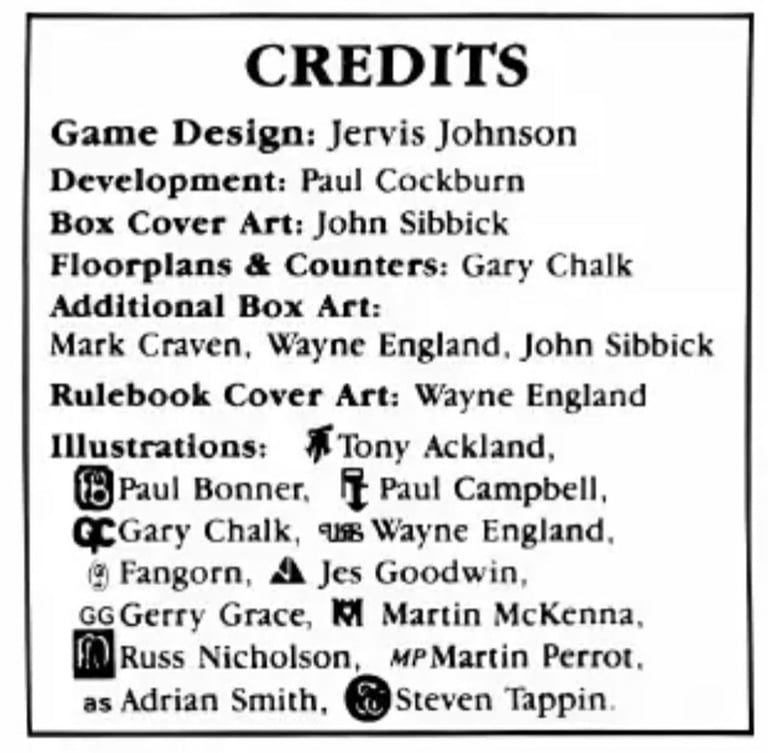
PC: I know this is disappointing, but I can’t remember anything about the production of those titles at all. It says in Advanced Heroquest that I was the ‘Developer’, but I don’t remember anything about it. I think the deal with Milton Bradley predates my time at GW, and may have been arranged by Ian Livingstone and Steve Jackson. I want to say that Bryan wasn’t interested in the arrangement at all.
Coming from TSR UK, you had a unique perspective on the broader RPG and board game industry. How did Games Workshop's relationship with other third-party companies and external designers change during your time there?
PC: Again, very quickly, it was clear that the existing arrangements GW had with various other companies would not last. We did some work with West End Games, but that went up in smoke. We did publish the RuneQuest hardbacks, mostly off the back of my close relationship with Greg Stafford. But Bryan Ansell wasn’t interested in anything that didn’t sell toy soldiers. At least not after the first few months of him taking over GW.
The Creation of Warhammer Fantasy Roleplay
You are often credited with pushing the WFRP setting away from standard high-medieval fantasy and towards a gritty, urban-noir Renaissance setting based on the Holy Roman Empire. What inspired you to champion this specific Thirty Years War aesthetic?
PC: I remember as WFRP was being conceptualised that I pushed very hard for it to not be another high fantasy game, but to be dirtier and grittier. I was a very keen student of the Thirty Years War, and I wanted the game to exist in that kind of messy, painful setting. So, I borrowed the Electoral system of the Holy Roman Empire rather than some neat systems of Kingdoms. Naturally, the setting for the Warhammer Old World already existed, but WFRP was going to go into much more depth than Warhammer Battle. I wrote or edited very little, but I did set that tone.
WFRP 1st Edition is still celebrated for its deep political intrigue and unique tone. Looking back at your editorial work on the core rulebook, what was the most difficult aspect of translating a tabletop wargame into a roleplaying experience?
PC: When you play a wargame, you are likely only dealing with a single day in the life of generals and their armies. A roleplaying game exists in time, the passage of time, and the changing fortunes of heroic characters over months and years. Various notes existed with a loose design of what WFRP might be, but they didn’t really cater for the needs of player characters to progress and advance. So, the single biggest design struggle was making careers work. The wargamers and Citadel just didn’t think in the same way as us roleplayers. That was a battle.
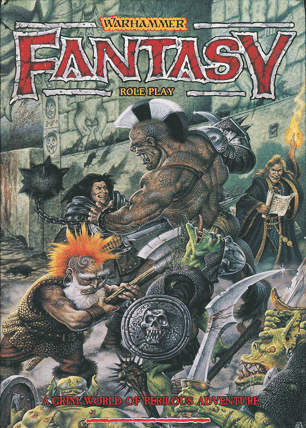
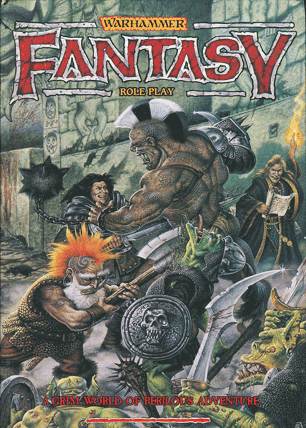
The WFRP 1st edition cover by John Sibbick is one of my all-time favourites - William King even wrote the short story 'The Dark Beneath the World' based on it! Do you remember how that specific illustration came to be the cover? Was it commissioned with a specific brief to capture the grim and perilous nature of the Old World, or was it a piece that just perfectly fit what you were looking for?
PC: I believe John Blanche commissioned it specifically for WFRP. It does the job perfectly.
It is a bit of an open secret among veteran fans that the regrettably named NPC "Gotthard Goebbels" was a cheeky nod to you by Carl Sargent! (Graeme Davis confirmed this in his blog) How did you react to being immortalized in the Old World in such a notorious way?
PC: Never really noticed it. Carl and I had known each other for years; both from the articles he wrote for Imagine and our mutual involvement in running and playing roleplaying games together. We sort of drifted apart during the Nottingham years, and I think he felt I had become a company mouthpiece. I really didn’t pay much attention to the caricature at the time. Sadly, he is no longer with us.
Proudest Work at Games Workshop
You worked on magazines, core rulebooks, and even early plans for GW fiction novels (which famously almost included Terry Pratchett!). Out of all your contributions to the company, what is the single piece of work you are most proud of?
PC: I’m going to confess that after the initial hopes I had, I came to view my time at GW as a colossal mistake, and a waste of my time. I am not one of those ex-GW people who tells fond stories of my time there at all.
Looking at the incredible legacy of the Warhammer IP today, is there a specific piece of lore, a mechanic, or a conceptual seed you planted that you are thrilled to see still thriving in the modern game?
PC: Apart from WFRP, you can barely see my fingerprints on anything. I was sidelines quickly, and left as soon as I realised the fiction concept wasn’t going anywhere, at least not to the scale I had negotiated.
Current & Future Projects
You have had an incredibly diverse career both inside and outside of the tabletop gaming industry since your time at GW. What kind of work or hobbies are you currently focusing your energy on?
PC: I’m currently self-publishing a series of pulp novels set in 1918 Berlin, with a heavy emphasis on the history and complexity of the Revolutionary period. I do love a messy setting!
Do you still keep an eye on the tabletop RPG and wargaming space today, and do you have any current or future projects that fans of your classic work should look out for?
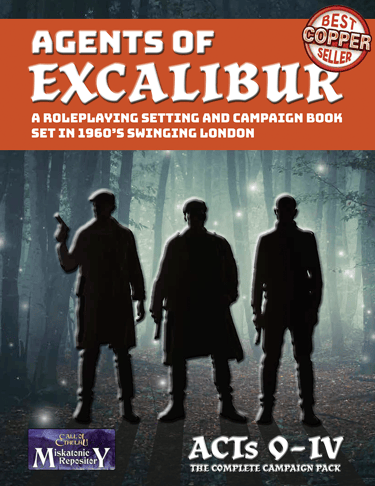
PC: Sadly, I am entirely out of the hobby these days. I did co-publish a series of supplements under the general banner of Excalibur in which the players are modern day Pendragon knights, transformed into agents of the British government. I’d love to get back to writing Pendragon adventures, but there has been so much water under that bridge, I doubt that could ever come about.
A massive thank you to Paul Cockburn for taking the time to share these raw and honest memories with us. It is always fascinating to look behind the curtain of the games we love, even when the reality isn't purely nostalgic.
HeroQuester.eu © 2023
Puedes contribuir a mantener activo este sitio web. Muchas gracias por tu apoyo!