Robin Dews - English version
ENTREVISTAS
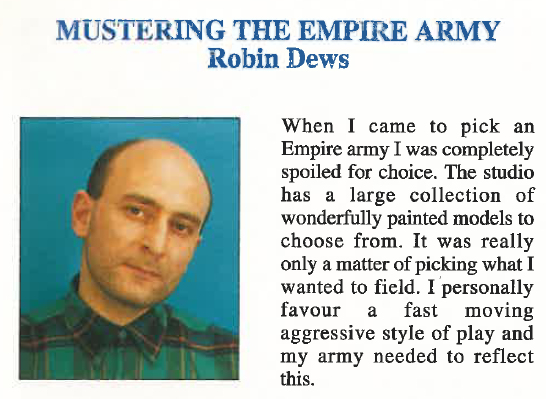
The Editor’s Desk and the Dungeon: An Interview with Robin Dews
Welcome back to the darkest corridors of the Old World. We have had the immense privilege of speaking with the designers, artists, and architects who built our favourite tabletop worlds. Today, we are joined by someone who not only helped shape those rules but also curated how we experienced the hobby every single month during its most formative era: Robin Dews.
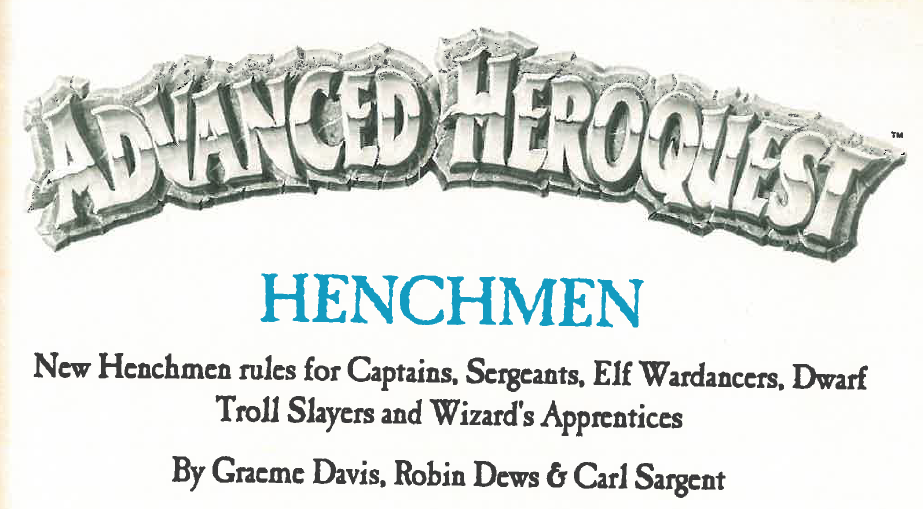
Robin’s journey through the tabletop industry is legendary. From the narrative-heavy trenches of Flame Publications to editing the iconic White Dwarf magazine during the golden age of Games Workshop, he was at the absolute epicentre of the hobby. For Advanced Heroquest players, his name is cemented in the game's history as the co-author of the brilliant "Henchmen" article in White Dwarf 138—a mechanic that brought much-needed character and cannon fodder into our favourite dungeon crawler.
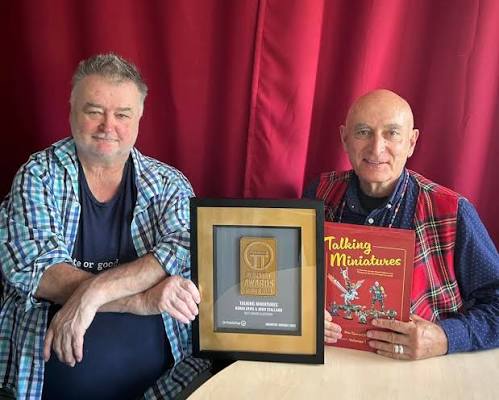
Recently, Robin co-authored the book Talking Miniatures, preserving the oral history of that wildly creative period. He graciously had the time to discuss with us his time in the studio, the challenges of hitting a monthly print deadline, and the enduring magic of the miniature’s hobby.
Complete interview with Robin Dews
From RPG to the Main Studio
Flame Publications operated as a fascinating, semi-independent arm of Games Workshop dedicated to Warhammer Fantasy Roleplay. What was it like working within that specific imprint, and what were the main challenges of producing deep RPG campaigns compared to the core studio's wargaming output?
Robin Dews: Well, you are asking me to go a long, way back here… I first joined the Studio in March 1989 after seeing a job advert for Editors/Game Developers back in White Dwarf #106. I had previously submitted a battle report to WD as a freelancer that was actually published in WD #107 and looking back, I think that went a long way towards me getting that job!
I then worked in the editorial department for nine months or so until Tom Kirby, who was the Studio Manager at the time, told me that I was much better at organising people than writing articles and asked me to run the production floor at Enfield Chambers and bring it under some kind of control!
This involved liaising with the various Studio departments – editorial, art, miniature painting and design - making sure that things got done in some kind of sensible order and to some kind of schedule!
At the time, GW was still trying to absorb the impact of both Warhammer Fantasy Battle and Warhammer 40,000!
Warhammer Fantasy Roleplay has been first released in 1986 as Games Workshop’s answer to D&D. It was then closely followed in 1987 by both WFB 3rd Edition and then of course 40K. Both of those products were game changers for the company. From the outset, Bryan Ansell always knew that the miniatures were where the money was and the effect of WFB and 40K was to turbocharge miniatures sales.
Compared to the relative ease with which new miniatures could be designed, cast, packaged and sold (often no more than a few days) the production of books, games and supplements was a difficult, time intensive and laborious process (especially in those pre-computer days).
And Bryan understood that role-playing games largely don’t sell miniatures. Yes of course, most GMs or DMs build up a large collection of monsters and other fearsome creatures with which to terrify and harass their players, but the average player would only need to buy one or two models to represent their favourite adventurer.
The result of all this thinking (and of course the sales numbers!) was that it was decided to get the main Design Studio to focus entirely on WFB and 40K and to spin off WHFRP into its own imprint – Flame Publications. Flame was initially staffed by Graeme Davis and Mike Brunton, both of whom had joined GW as part of the initial development team for WHFRP They were joined by artist Tony Ackland, whose illustration style was now considered more appropriate for RPGs rather than mass combat games.
The brief for the three of them was to produce one WRFP supplement each quarter and 6-8 pages of new material for White Dwarf every month. At around the same time, some new technology arrived in the Studio in the form of a couple of Apple Mac SE30s. These held the promise of simplifying the complex and long-winded chain of manual tasks that were required to produce books and supplements and so enabled Flame to become a fully independent publisher.
So, Flame was set up in Nottingham, away from the main Studio, in the same building as Marauder Miniatures, and for a year or so it was extremely successful. Graeme and Mike were both experienced writers and developers and Tony would handle all the production and illustration tasks.
Then in 1991, Graeme decided to relocate to the US where the RPG industry was still booming and shortly afterwards Mike left to join computer games company – MicroProse.
As a result of these two departures, Carl Sargent was recruited to take on the main writing job, and I was brought in to handle all the production duties, leaving Tony to get on with the art and illustration.
What was cool about working at Flame, was that we were largely left to our own devices. There was little interference from the main Studio and so long as new products came out on regular basis, we were largely left alone. Years before it became commonplace, Flame was also set up as its own mail order distributer. Customers could phone up place orders or send cheques through the post, and we would package up their books and supplements and walk them down to the Post Office at the end of every day. This also meant that quite a lot of our time was spent on the phone, talking to WFRP fans about their favourite characters and which bits of the adventure they were enjoying the most and so on. Often half a day would be gone, and you’d have done nothing but chat to hobbyists!
Other than that, my work would largely be one of taking the text from Carl, proof reading and copy editing it and then laying it out with illustrations and art suggestions from Tony.
During your time at Flame, the team released the legendary Castle Drachenfels campaign for WFRP, adapting Jack Yeovil’s terrifying setting. What do you remember about the development of that specific module, and how did you approach translating such an iconic piece of Warhammer fiction into a structured RPG adventure?
RD: I have to be honest here and say that I have no special memories of Drachenfels at all. The writing was done by Carl and although I was familiar with the novel, I wasn’t involved in the development of the WFRP adventure. My job was to make sure it all came together and got published.
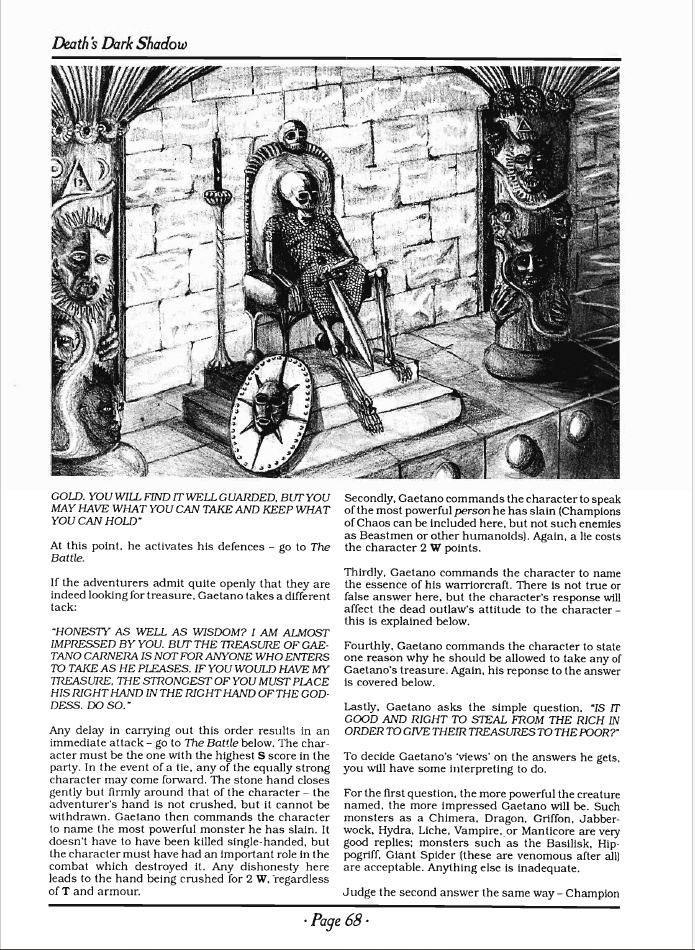
The only other memory I have from that time, was when we were finishing off the final Flame product I worked on – Death’s Dark Shadow. Tony was away on holiday; we had a print deadline looming and we were short of a key illustration of the Undead guardian – Gaetano Carnera. So, I decided to do it myself!
I had a reasonable feel for Tony’s style and although I’d never had any artwork published, I thought that it couldn’t be that difficult! So, I spent the afternoon doing a not-bad job of a skeleton warrior sitting on a throne! After the book was published, I was terrified for weeks that John Blanche or someone else in the art department would ask, “who the hell did this illustration?” But no-one ever did! And to this day, it’s been my secret that I manged to slip a drawing into that final book…
When Flame was eventually absorbed back into the main studio, you transitioned into broader roles. How did your time developing rich, narrative-heavy WFRP material influence your approach when you began editing White Dwarf and writing for boxed games?
RD: We are now in 1991, and Bryan was in the process of selling Games Workshop to Tom Kirby. Tom absolutely knew that the money and the future lay in promoting and developing Warhammer and 40K. Flame was therefore wrapped up and brought back into the main Studio which by then had moved from its original home in Enfield Chambers to a new location on Castle boulevard in Nottingham. Tony re-joined the art department, working alongside Dave Gallagher and Wayne England, and for a while Carl continued to produce material for White Dwarf, but was never happy. He was one of life’s mavericks and the new Studio was far too structured and process driven for him and so he resigned shortly afterwards.
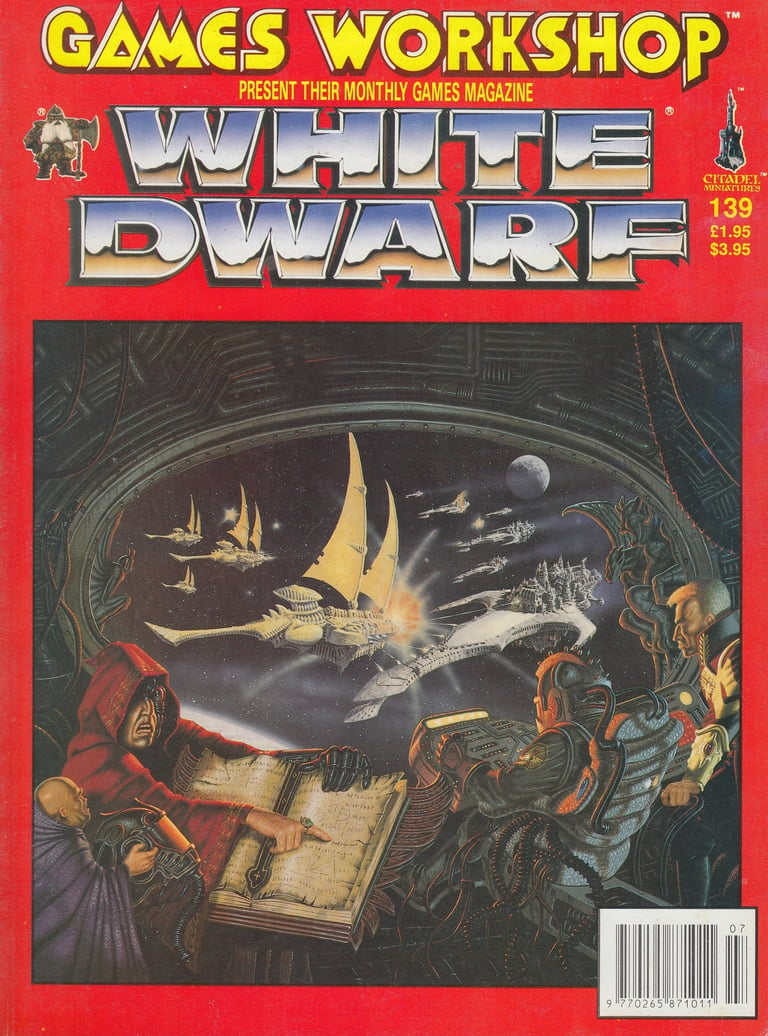
Meanwhile, I joined the White Dwarf team under editor Simon Forrest. I worked with Simon for some three or four months, when he quite suddenly decided that he also wanted to pursue other interests and left the company. Tom asked me if I would pick up the reins and so in July 1991, I took on responsibility for White Dwarf from issue #139.
I am not sure that I can give you a simple answer to your question about how did working on narrative heavy material for WHFRP influence my relationship with White Dwarf. You must remember that we are now back in 1991. The internet doesn’t exist, websites don’t exist, YouTube doesn’t exist and mobile phones are bricks. All of the myriad channels that we now use for engaging with our hobbies and interests, simply didn’t exist!
What we had back then were specialist magazines! If you were interested in coin collecting, model railways, jet aircraft, canals and narrowboats or fantasy miniatures and wargaming, then there was a magazine for you. That was the function of White Dwarf – to enable its readers to feel connected as part of a community of gamers and hobbyists.
The Editor's Chair & The Golden Age
You stepped into the role of White Dwarf Editor during what many consider the absolute golden age of Games Workshop. What was your initial vision for the magazine when you took over, and how did you want it to evolve?
RD: Well, this is really a continuation of the previous answer… All magazines at the time, and this is probably still true today, must deliver a number of different and sometimes contradictory tasks.
First of all, we used to have a mantra on the White Dwarf team, that every article, every advert, every page has to either EXCITE, INSPIRE or INFORM, or best of all, do all three!
And these were not random words. When you are EXCITED, you are having an emotional reaction. You are ‘feeling’ excited. Beautifully painted miniatures laid out on a page do the job perfectly. Fantastic artwork, on the cover and inside the magazine also fits the bill, it creates and emotional reaction in the viewer.
The second word INSPIRE, is equally important. We say that you ‘feel inspired to do something’ and therein lies the key. We wanted the reader to be inspired or motivated to DO something. At a basic commercial level, we wanted them to be inspired to go out and buy those miniatures and try and paint it like the ones they can see in White Dwarf, but it’s also a bit more subtle than that. Terrain making articles like the one in WD #185 that showed you how to make a Warhammer House with just a cereal packet, a pair of scissors and PVA glue were also right on the money. The battle reports were all saying, “Just look how much fun this is! You can do this yourself at home with your friends!” and so on.
And the final word is INFORM. I wanted the readers of White Dwarf to learn something every month. I wanted them to come away from every issue, having learned something new about the hobby. And I don’t mean this in a teacherly/school kind of way; I mean it in the way we can derive such enjoyment and pleasure from becoming better informed about an interest. How deepening out knowledge, deepens our understanding and appreciation for whatever it is we are passionate about, be it fantasy gaming or quantum gravity!
So those three words – EXCITE, INSPIRE and INFORM, (or FEEL, DO, THINK) fed into everything we did.
The second big challenge for any specialist hobby magazine was to balance the needs of two different users. You have to be able to appeal to readers of both their first or their fiftieth issue! Some people will never have seen your publication, and you have to offer them a way in. During my time as editor, and for many years before, the entry point was always through the cover.
Really cool, exciting, intriguing artwork on the front cover was designed to get people to pick the magazine up. We wanted them to be able to answer, at a glance, their own question of - “that looks cool, what’s that all about?”. Once it was in their hands, we then wanted them to flip it over to see the back cover. This inevitably showed an exciting battle scene, on great looking terrain, and with beautifully painted miniatures. Those two glances answered the question – “it’s all about exciting artwork and super detailed models.” That was enough. Only then would people look inside and decide if they wanted to buy a copy. And the truth is, for many new readers, much of the content was impenetrable: names and races and monsters and so on. But it didn’t’ matter, in fact it was part of the appeal. We wanted it to feel like you were entering a secret and hidden, if not exactly forbidden, world.
On the other hand, we had to also appeal to people who had spent years in the hobby and so offer them content that they could dive into. This is where Battle Reports came in. The allowed us to provide a window into the hobby and an insider’s view. Here were Andy Chambers and Jeris Johnson, playing the same game of 40K that I play at home, and explaining to me their army selection and strategy and tactics. If you learned something new that you could try out in your own games, then that was brilliant! If you saw Andy or Jervis using a tactic or troop choice that you also liked to use, then that was even better. It made you feel really good that these guys were actually playing and enjoying the same game that you played. They were entertaining, they were exciting and they were informative. They were golden!
So, I took over as editor in August 1991 with WD #140. The first modern battle report - Alaitoc Craftworld vs the Blood Angels - appeared three months later in WD #143. The first Warhammer battle report appeared in WD #148 and then by issue WD #153 they were a monthly feature. Its one of my contributions to the magazine that is still there to this day!
As Editor, you were at the nexus of the rule’s writers, the miniature designers, and the legendary art department. What was the day-to-day reality of managing that chaotic, highly creative pipeline to hit a monthly print deadline?
RD: Wow! That question could take me all day…
You have to remember that I first became the White Dwarf Editor in 1991. Then, after fifty issues, in 1995, I relinquished that role to become the Design Studio Manager. I then remained Head of the Studio until 2001 and so I spent a decade at the heart of the most exciting, fun, creative, crazy place, at the very craziest time. This was the era in which almost every product that Games Workshop still sells to this day was created: Warhammer 5th Edition, Epic 40,000, GorkaMorka, 40K 3rd Edition, Mordheim, Necromunda, Inquisitor, Man O’ War, Warhammer Quest, the list goes on and on.
How did we make it all happen, looking back from now…I have no idea! We were young, we knew that we were doing something brilliant and we had a mission to change the world, one miniature at a time!
Going back to White Dwarf, the first year was pretty insane. As you say, we had a fixed and immovable print deadline. Miss that and you lose your print slot. Drop that by a day, and your distribution date to the newstrade slips, along with your credibility as a publisher and much more importantly your on-sale shelf life! As we used to say at the time. “Print deadline is Friday – NO SAVING THROWS!”
At the time White Dwarf was still very much a hand to mouth operation. One of my first innovations, was to recruit and build a dedicated White Dwarf team. Initially there were just three or four of us, myself, Jake Thorton, Ade Wood, I can’t remember all the names now… Oh Mark Watts – he also played in a couple of the early Space Marine battle reports.
So, after the last issue had gone off to the printers, we would get together on the following Monday with a blank page planner, and I am talking here about a large A3 sheet of paper, and go: “OK guys, we’ve got 80 pages plus covers and three weeks…what do we have?” We would always start with the new releases and that would give us a direction. “Do we have a new Armies or Codex coming out? Great – that’s the cover!” One of the team would then agree to set up the back cover photo with at least one of the armies from that release. “What else?” “Retail page and new store openings – that’s another 4-6 pages…” “Flame can give us another 6-8 pages of Marienburg” “OK we’ve also got 4-6 pages of Mail Order showing all of the new miniatures’ releases, can one of you go and talk to the ‘Eavy Metal guys and see how they are getting on with painting them?”
And that conversation would go on every morning, of every day for the next three weeks! You see, we had around twenty-one days to produce each issue (…and yes that does include working most weekends, which we often did!) An eighty-page magazine, every twenty days, with three or four people, we were fast, and we were good!
White Dwarf had to act as both a promotional catalogue for new releases and a genuine hobby magazine filled with crunch and lore. How difficult was it to strike the right balance between selling models and providing deep, playable content?
RD: Getting the balance of content right, was always a challenge, but not in the way I think you are implying. Indeed, this question goes to right to the heart of the purpose and function of White Dwarf itself.
There are many folks out there that still say: “Oh it was much better in the early years, when it was a proper hobby magazine…” Well, I am sorry to disappoint you guys, but it was NEVER just a hobby magazine. White Dwarf was set up by Ian and Steve as the marketing and promotional arm of Games Workshop. It was always there to promote and sell the company’s products. I think that what Bryan did, when he insisted that we drop all external advertising and focus entirely on Games Workshop games and Citadel Miniatures was simply being honest and transparent. What we were saying was: “if you are interested in Games Workshop’s games and miniatures, then White Dwarf will interest you. If you are not, then it will be largely incomprehensible!”
You see, White Dwarf broke completely with the standard magazine publishing model. In that model, you create content in order to attract readers. You then sell advertising space to companies that want to sell products to those same readers. And, if your model works, the advertising income covers all your print and production costs, and the cover price become your revenue and profit stream.
In the case of White Dwarf, it said it in big letters on the front of the magazine – ‘Games Workshop present their monthly hobby magazine – White Dwarf’ It couldn’t be clearer and I liked that. It was the same principle that was applied to the stores. They were not ‘game’ stores, they were Games Workshop stores, and if you like Warhammer or 40K, then you will have a great time there.
So, for me, there was never a conflict. Everything was there to either excite, inspire or inform our readers. And, if at the end of a battle report or a hobby article or background feature, they were motivated to go out and buy things to deepen their enjoyment of the hobby, then our job was done.
Advanced Heroquest & White Dwarf 138
During your tenure, White Dwarf was a lifeline for expanding boxed games like Advanced Heroquest, providing new tiles, monsters, and mechanics. Was this a deliberate studio strategy to keep the boxed games alive, or was it driven by the writers' own passions?
RD: Another interesting question… I hope I’ve already established in my previous answers what White Dwarf was, and what the content was there to do. So, whether it was new rooms and corridors for Space Hulk, a scripted adventure or character class for AHQ or a tactics article for Blood Bowl; the aim was always to fully engage the reader and deepen their enjoyment and commitment to a particular game system or range of miniatures.
Now this might all sound a bit crude and commercially calculated, but that’s simply not the way the cool stuff happened. The Design Studio in the late 80s and early 90s really was an extraordinary place, it was unique. I can think of no other company from that time that was able to maintain and support such a concentration or artists, writers, sculptors, designers, non-conformists, mavericks and rebels as GW! We were young, and all just in love with games and miniatures and had the opportunity to spend our days in the company of other people who felt just like us. It really was magic.
So, when I wrote a Blood Bowl tactics article, ‘Block and Tackle’ that was published in WD #177, it wasn’t done as commission or instruction. I wrote it because I loved Blood Bowl, I played with a human team - The Love Pirates of Doom! - and I was passionate about the game.
Andy Warwick produced some brilliant articles and adventures for Advanced Heroquest, but he did so, because he was an old school D&D player and wanted to bring some of that excitement and energy into AHQ.
We were living day to day, in this tight little gaming community and so of course I would tap up the people, who I knew were enthusiastic about a particular system to help create material for Dwarf, because then that passion would shine through, and hopefully, the readers would be inspired.
In June 1991, White Dwarf issue 138 published the "Henchmen" article for Advanced Heroquest, which you co-wrote. It introduced a brilliant layer of resource management and characterful retainers to the game. Where did the initial idea to bring more material for AHQ came from? How was the process to decide what was included in the article or not?
RD: As I’ve said in the previous answer, we were always looking for ways in which we could extend the range of scope of our published games. It is absolutely core to running a successful hobby company. Prior to this period, most games were simply self-contained. When you bought a copy of Monopoly, everything you needed to play was in the box and there was nothing more to add. GW’s approach was derived from the historical wargames industry where each ruleset, was simply a gateway to collecting and painting and gaming. The big innovation that GW made, was to present those rules, not as a book, but in a box, together with plastic miniatures, terrain, dice, range rulers and so on.
I think that the first time this was done, was with Adeptus Titanicus and then subsequently Space Marine. AHQ was the first time the boxed-game format was used for fantasy gaming, long before Warhammer 4th edition hit the shelves in 1992.
So, you had what we called the ‘core’ game - the doorway through which players could enter, and then we had White Dwarf and the Citadel designers by which we could continue to add new rules, new miniatures and new content.
With regard to the Henchmen article from WD #138, I had to go back and look that one up. Graeme Davis was a staff writer at that time, having initially joined the company to help develop WHFRP. Carl Sargent was a freelancer, who later joined Flame. As we’ve established, I was working on the White Dwarf team under Simon Forrest and was a couple of months short of being promoted to editor. My guess would be that Graeme and Carl would have been asked to come up with a way of including new categories of Henchmen into AHQ – Wardancers, Troll Slayers and so on, as a way of encouraging players to buy more Citadel miniatures. I would have been involved in playtesting the new rules and then doing the editing, design and layout for White Dwarf.
You wrote that article alongside the late Carl Sargent, who was instrumental in shaping the Terror in the Dark expansion for Advanced Heroquest. What was the collaborative process like when designing rules with him? Were you also involved in the development of Terror in the Dark?
RD: I have to say that Carl was one of the least collaborative people I ever worked with at the Studio. He knew what he wanted and was good at what his did, but at the same time, he was arrogant and opinionated and always considered himself to be the cleverest person in the room (…sorry Carl, but I would say the same thing even if you were still with us!). That expansion was co-credited to Graeme and Carl, and I had nothing to do with it.
I took over responsibility for White Dwarf from issue #139, (although my name only appears on the masthead with issue #140) and from then on, my hands were very full indeed.
Were you usually part of the testing rounds (if any) before releasing any article for Advanced Heroquest or any other GW game?
RD: In the early days, playtesting was largely done amongst the game developers – Rick Priestley, Nigel Stillman, Jervis Johnson, Richard Halliwell and so on. At times other people would be brought in, especially members of the editorial team who, would be responsible for editing and producing the final version. It was important when working on a game or book, that you had a reasonable insight into how it played and what the designer’s intentions were.
Later on, as new designers like Andy Chambers came on board, more people would be invited to try out games in progress, especially in the later stages. Good games design is part craft, part science (especially mathematics and probability) and part voodoo! Jervis talked a lot about this in his interview for Talking Miniatures and how great games design looks easy. But it is in fact a long hard slog!
The one memorable exception, that I do remember very well was the development of 3rd edition Blood Bowl. Jervis knew that he had something great and believed he’s cracked the problem of how to enable character skills development in a tabletop wargame as opposed to an RPG. (Which indeed was true, as Blood Bowl fully opened the door to Necromunda, GorkaMorka and later on Mordheim)
As soon as he has a working ruleset, he put it out to the whole Studio and people really took it to heart. Throughout that Spring of 1994, the whole Studio would down tools at lunchtime and out would come the Blood Bowl teams. He would pick up on any feedback: clarity in the rules, mechanics that didn’t quite work and so on, and a couple of days later he would issue an undated set of rules, and the games would go on.
To this day, Jervis describes it as the tightest and most error free ruleset he ever produced. And the longevity of Blood Bowl stands testament to that process… and boy was it fun!
Preserving History: Talking Miniatures
Talking Miniatures serves as a vital oral history of Games Workshop's formative years. What was the spark that made you and John Stallard realize these stories needed preserving, and during your interviews, was there a forgotten design decision or behind-the-scenes story that completely surprised you?
RD: Well, we talked about that in the introduction to the book itself. John and I were sitting in his back garden in the late summer of 2018, having a cup of tea and just ruminating on the passage of time. We had both joined Games Workshop in the 1980’s and here we were, almost thirty years later on the verge of collecting our pensions! We also seemed to be losing people at an alarming rate. In the previous few years, Wayne England, Richard Halliwell, Mike Brunton and Duncan McFarlane had all passed away, and we realised that if we didn’t do something to capture the memories and stories of those early years, then it would soon all be gone for good!
We didn’t know at that point that Ian Livingstone was already working on his own book about the early years of Games Workshop – Dice Men - but what we had in mind was something quite different. Books by the founders of successful enterprises tend to give a top-down view of history and tell how lucky or clever and successful they were. We wanted to capture the bottom-up perspective of people simply going to work and doing jobs. As I wrote on the book jacket, our goal was to tell the story of: “…ordinary people, doing extraordinary things, with incredible levels of skill, passion, commitment and belief.”
The book then took a further five years, to research, write, source and compile, before being published in the summer of 2023. And sadly, time has also proven us right. Even since publication we have lost two more of the voices from that book – Paul Sawyer and Tim Pollard. So, I hope that Talking Miniatures will stand testament for a long time to those stories and those people.
As for behind-the-scenes stories… I learned so much from all of those conversations. For those who have not seen or bought the book (…and why not?) our method was to sit down with our old friends and colleagues, switch on a recording device and just talk – hence the name – Talking Miniatures! I think that one of the earliest sessions we did was with Rick Priestly, and it was only after listening back to the tapes did, I realise that we’d really struck gold. Here were three old friends – Rick, John Stallard and me, sitting around and talking about the ‘old days’. As happens when any group of friends get together, a memory from one of them, sparks a recollection from someone else and suddenly the conversation is heading into a whole new direction. It was just not something you could capture in a standard interview format, and it was great. The real technical challenge came later, when we had to transcribe those tapes, sort out who was speaking, figure out what they were saying (amidst the howls of laughter) and then edit it so that it made sense when you read it on the page.
Just read the book, its full of interesting, insightful and occasionally hilarious stories…
A major theme of the book is the unique, sometimes chaotic creativity of the Bryan Ansell era. Looking back through the collective memories of everyone you interviewed, what do you think was the "secret ingredient" that allowed that specific group to create such enduring worlds?
RD: I simply cannot answer that one. The truth is, that there was no single, simple, secret ingredient. Bryan was the facilitator, Bryan was the Circus Ringmaster, Bryan was the entrepreneur, engineer and wizard who had a vision and was able to gather a group of creative misfits, rebels and mavericks around him who could make that vision a reality. But the secret?
Think about music…or theatre or cinema or art in general… If you get the right people, in the right place at the right time, then this ‘other’ thing emerges. And you cannot predict it, you cannot plan for it to happen, and you certainly cannot fully control it. But if you can recognise it, then you can ride it for a while, and that is what Bryan was able to do.
Outside of that ‘magic’ Bryan had two obsessions…
1) That the product should be the best it could possibly be. (…at times, even beyond the point of commercial sanity. Think Realm of Chaos!)
2) And that product must be accompanied and supported by the very best possible service to the hobbyist and customer.
No magic and no mystery and they are both the twin pillars of any successful enterprise to this very day.
Warlord Games & The Changing Industry
You eventually brought your expertise to Warlord Games. How does the publishing and creative culture there, focusing heavily on historical wargaming, compare to the "wild west" days of 80s and 90s GW?
RD: Your question is not quite accurate. Warlord Games was founded by John Stallard and Paul Sawyer almost twenty years ago in 2007. It was their shared love and enthusiasm for historical wargames – that led them to create what is today an exciting and vibrant toy soldier business. I had nothing at all to do with the creation of the company; it was all Paul and John.
And because he is a good friend, I know that John would agree with everything I have just said about how you cannot bottle the magic. But you can try to create the conditions in which it might appear, and that is what he and Paul did.
I was talking to Jim Butler recently, (Head of Direct Sales and Marketing for Warlord and another veteran of the 90s GW) and we were saying that everything about Warlord reminds us of that time – the people, the culture, the attitude, everything. It’s a great thing and a real tribute to John’s leadership.
My involvement came with the creation of Shaggy Dog Publishing Ltd. I’ve already told the story about how John and I decided that someone needed to capture the stories of the early GW before they were lost. Pretty soon afterwards we decided to set up a company to produce and publish the book. So Shaggy Dog has two Directors – John and myself, two staff – John and myself and that’s it. Warlord Games does the order processing and shipping for us but otherwise, I do the editing, design and social media and John does the marketing and sales!
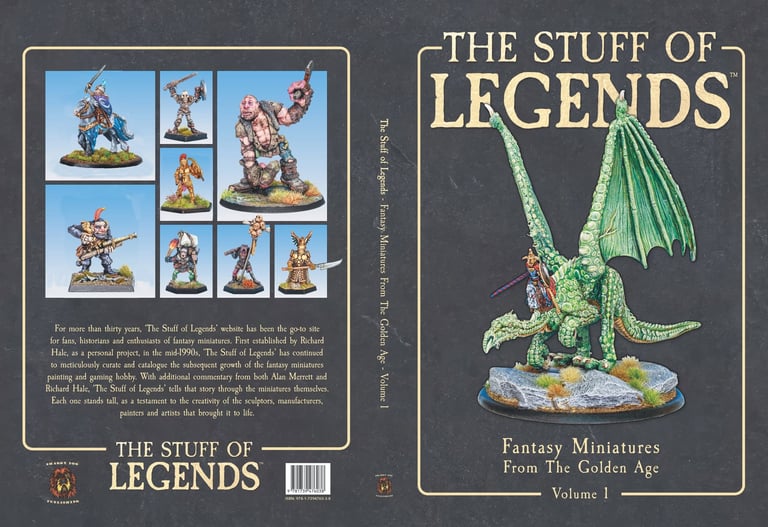
But as you might imagine, we wanted Shaggy Dog to have that same creative energy and can-do attitude that we have already discussed. And I believe we do, our latest release – The Stuff of Legends: Fantasy Miniatures from the Golden Age – has it in spades!
Of all the issues you edited, the RPG campaigns you worked on at Flame, or the projects you shepherded into print during your time at Games Workshop, what remains your absolute proudest achievement?
RD: Oh, that one is easy – Battle Reports in White Dwarf! Even before I got my hands on the helm of White Dwarf, I knew what I wanted to see.
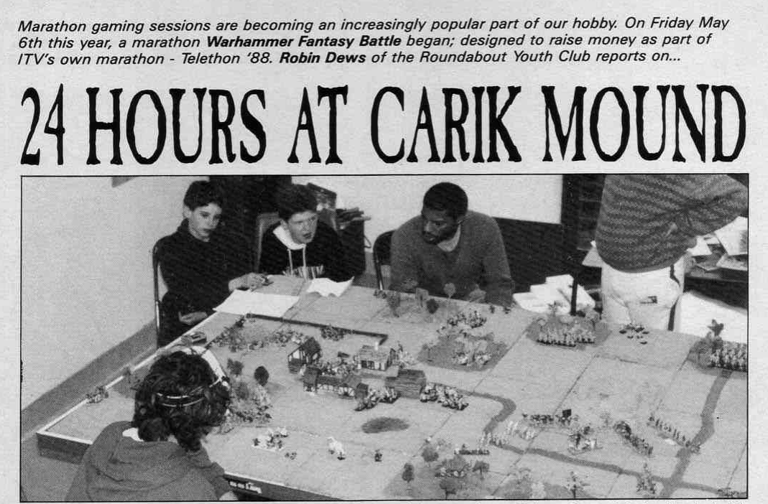
In fact, as I think I’ve already said, before I even worked for GW, I’d submitted my first ever battle report to White Dwarf as a freelancer. It was published in issue #107 in November 1988 as ’24 Hours at Carrick Mound’ and was a large multi-player game of Warhammer 3rd edition that took us twenty-four hours to complete!
It took me a while to get the format right, but since issue #153 in September 1992, there has been a battle report in pretty much every single issue of the magazine. And that format, despite a few tweaks here and there, has proven to be remarkably resilient even as technology has changed. I now see that style of narrative battle report all over the place, in gaming magazines, on websites, on YouTube…everywhere!
And we made them look easy… Oh look there is Jervis and Andy playing a game of 40K, just like I do at home. No…no…no! It might look like they are playing a game like you do with your mates, but how often in your games of Warhammer or 40K or Bolt Action, do you record every single dice roll in a notepad? How often do you stop and take polaroids (Yes polaroids…because we had no digital cameras or iPhones in 1991!) after every move? When did you last plan out your army choices and then write a narrative to explain the logic of your selection?
These were wargames, they were proper wargames…but they were also publishing activities and although they looked easy, they were complex, difficult and time-consuming to produce, and I am rightly very proud of them. They were quite literally games changers!
Closing Thoughts
A massive thank you to Robin Dews for generously sharing his time and insights with us. For many of us, the monthly arrival of White Dwarf was our primary window into the wider hobby, and Robin's editorial direction was instrumental in making the Warhammer World feel incredibly vast, dangerous, and alive.
If you haven't yet picked it up, I highly recommend checking out his book Talking Miniatures (co-authored with John Stallard). It is an essential read for anyone interested in the history of tabletop gaming, filled with firsthand accounts from the sculptors, artists, and writers who shaped the industry.
HeroQuester.eu © 2023
Puedes contribuir a mantener activo este sitio web. Muchas gracias por tu apoyo!